
Batumi Raptor Count

International project for the study & conservation of the biggest autumn raptor
migration bottleneck in the Western Palearctic ...

News

view:  full / summary

Spectacular migration at the Batumi bottleneck!

Posted on September 8, 2010 at 12:03 PM Comments comments (0)
Good day to you all,

as expected it has been a very busy week for the team in Batumi as the peak migration of Honey Buzzards Pernis apivorus is right on time! Since the last update weather conditions changed from bright and sunny to cooler conditions on September 4th. With some rain during the nights and some low cloud cover at daytime, migrating raptors were not only numerous but they were also flying closeby. A nice bonus for our counters and students indeed!

We start on Sept 4th and 5th when Honey Buzzard migration exceeded 60.000 and 35.000 individuals respectively. On the 5th also the 2nd juvenile Steppe Eagle Aquila nipalensis of the season was seen whilst a fly-by of a Demoiselle Crane Anthropoides virgo was spectacular to say the least! Luckily, the crane passed in between the two counting stations, making it visible for all of the people counting that day. What a treat!

The 2nd Juvenile Steppe Eagle - Aquila nipalensis - of the season at Batumi on Sept 5th

The following day (Sept 6th) was a rainy one, halting migration greatly. Still, when the sun returned the day after another great boost off Honey Buzzards was recorded with over 48.000 ind. yesterday. A Nightjar Caprimulgus europaeus lingering around the Makhindjauri counting station was a special sight as well. However, today (Sept 8th) was again a calm day as intense rainfall limited the soaring potential for broad-winged raptors.

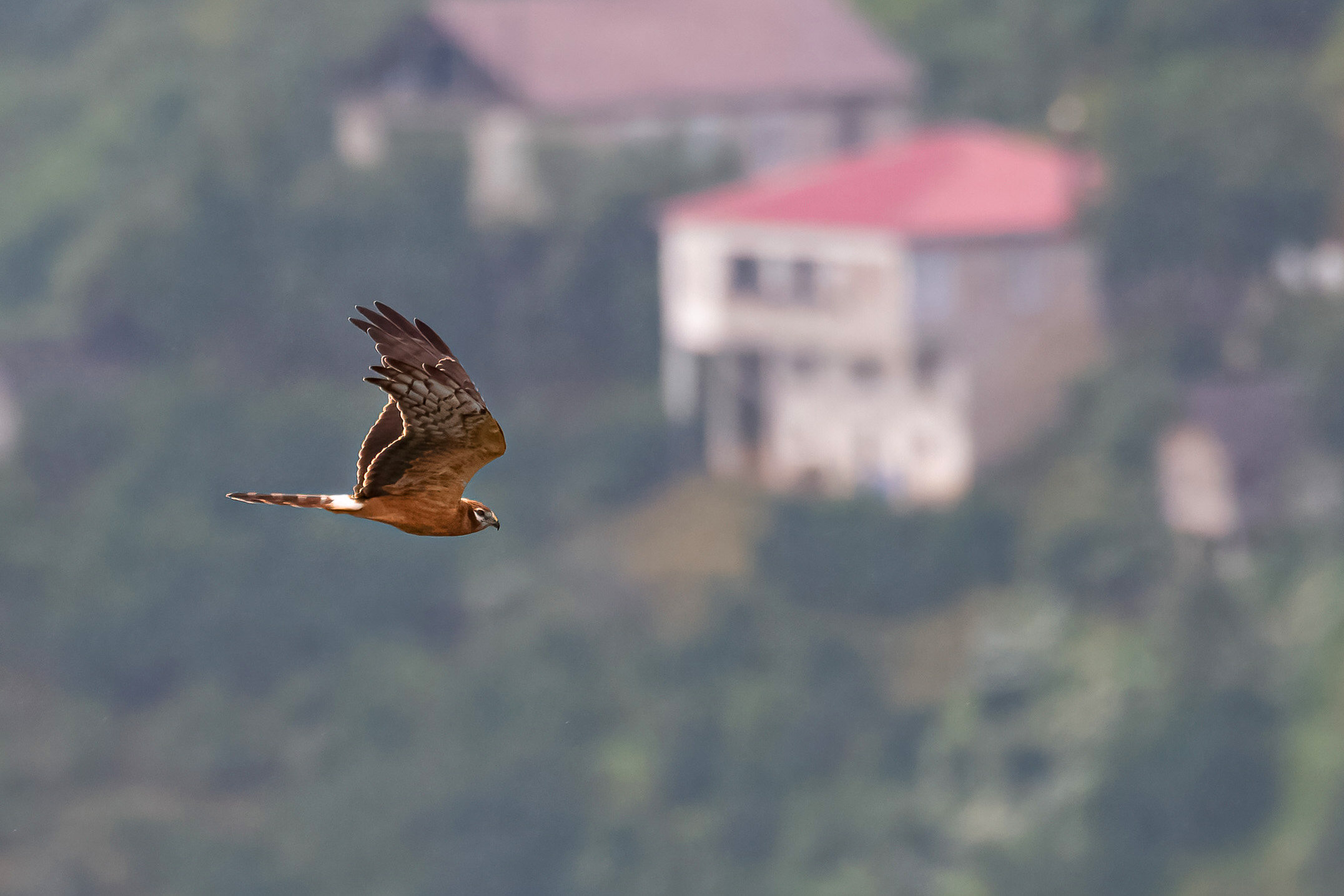
An adult male Honey Buzzard - Pernis apivorus

So far the following impressive totals have been recorded thoughout the season: ca. 310.000 Honey Buzzards, 10.000+ Black Kites Milvus migrans, 6.000+ Montagu´s Circus pygargus and Pallid Harriers C. macrourus (mostly C. pygargus) and no less than 1.000 Rollers Coracius garrulus.

It seems the Georgian and Turkish students joining the BRC team this year have come right in time to enjoy large amounts of birds under good observational conditions.

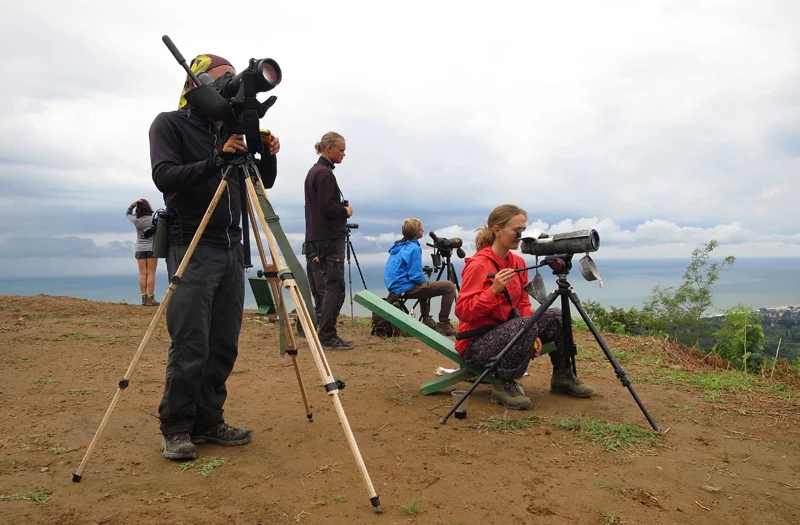
 Determining age of Honey Buzzards is done carefully. After a while however, it might lead to a case of scope-eye ...

Clear communication in between stations is important to avoid as much double counts as possible ...

Also at Kazbegi the number of migrant raptors has been rising, though Honey Buzzard is a rather scarce species here indeed. Especially large flocks of Black Kite make up the bulk of raptor migration here so far, whilst harriers are also flying in large numbers. As expected, Pallid Harrier seems to be quite numerous here. For the counters here, a Blue-cheecked Bee-eater Merops persicus was a nice surprise in between a passing flock of European Bee-eaters M. apiaster.

Other bird news comes from the harbour in Batumi and the Chorokhi Delta. Due to mild rain at night very large numbers of passerines and wading birds can be found in the shrub during the morning hours. This has resulted in observations of a 1st yr Pied Wheatear Oenanthe pleschanka and a Orphean Warbler Sylvia hortensis in the harbour along with dozens of other birds. 

It is no surprise then that also the Belgian ringing team in Chorokhi has had tremendous succes during the last week. Impressive numbers of Great Reed Warbler Acrocephalus arundinaceus, River Warbler Locustella fluviatilis and many other species have been ringed succesfully. Several hundreds of birds have been caught this way on several days but most spectacular was the record of Lanceolated Warbler Locustella lanceolata on Sept 6th. A first for Georgia!

Allthough there have been no extravagant reports of raptor shooting from the hills, hunters in the delta are proving to be a real threat to all that flies past. Species that were observed to have been shot include Glossy Ibis Plegadis falcinellus, Grey-headed Purple swamphen Porphyrio porphyrio poliocephalus, Broad-billed Sandpiper Limicola falcinellus, Black-winged Pratincole Glareola nordmanni, and many more.

Many of these species are protected under international law. Let us hope the spectacular records of the ringing team will be enough to persuade local officials to do something about the illegal shooting of these birds. In the mean time, the youngsters from the area are as enthusiastic and curious as ever. A new generation of birders and conservationists that need to be looked after!

In this respect we are thrilled to announce that BRC is having good communications with the Georgian Centre for the Conservation of Wildlife in order to adress the conservation challenges from the region in a sustainable manner!

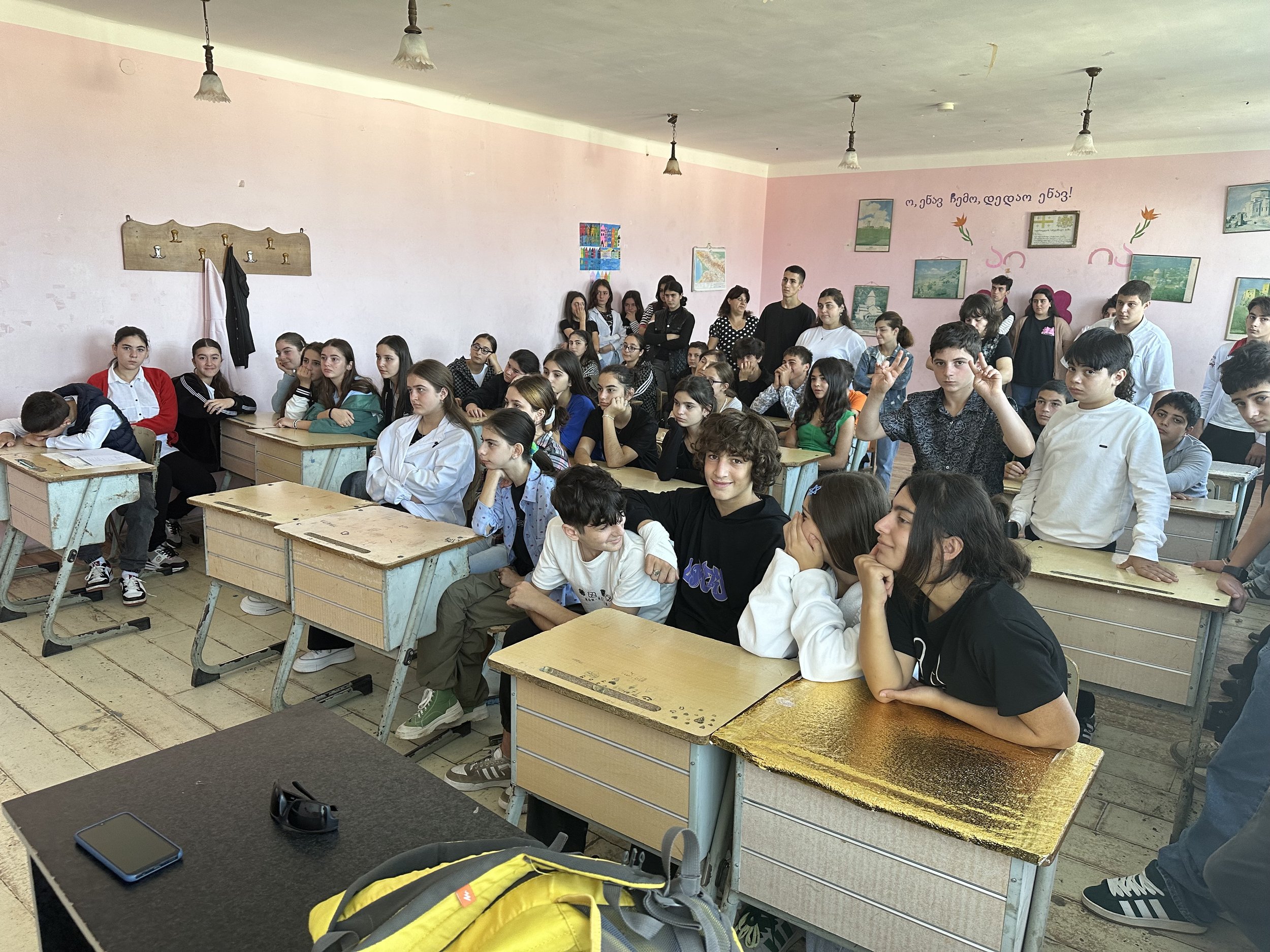
Another future conservationist for Georgia? With the combined efforts of BRC and GCCW, we aspire to make it happen!

As always, we will keep you posted!

Nahuamdis! Untill the next!

The BRC Team

Short update

Posted on September 2, 2010 at 5:53 AM Comments comments (0)


Johannes reports:

After two days of rain the weather is improving and temperatures are rising to 35° and higher on the counting stations.


Generally the migration activity is low, but the numbers of Montagu's (Circus pygargus) and Pallid Harriers (Circus macrourus) is growing every morning. Already 850 Montagu's Harriers and 950 Montagu's/Pallid Harriers have been seen passing south thus far.


Some other news worth mentioning:


One group of 134 White Storks (Ciconia ciconia) on the 28th of August.


One Long-legged Buzzard (Buteo rufinus) on the 29th of August.


First juvenile Red-footed Falcon (Falco vespertinus) on the same day.


First juvenile Steppe Eagle (Aquila nipalensis) 30th of August.


A good sighting was a Booted Warbler (Hippolais/Iduna caligata) at the Black Sea shoreline close to Makhindjauri on the same day.


The Chorokhi delta just south of Batumi is filled with Great Reed Warblers (Acrocephalus arundinaceus), Moustached warblers (Acrocephalus melanopogon), Rose-coloured Starlings (Sturnus roseus) and Greater Short-toed Larks (Calandrella brachydactyla)...


Two weeks of counting ... 100.000 Honey Buzzards!

Posted on August 28, 2010 at 10:18 AM Comments comments (5)

Dear BRC enthusiasts,


it has been about two weeks since the start of count and in that time approx. 100.000 Honey Buzzards Pernis aviporus passed the Batumi bottleneck. This included over 60.000 individuals on August 24th. The weather however turned for the worse and heavy rainfall has somewhat halted raptor migration during the last days of the count. Luckily, the Batumi area was spared of dangerous landslides like those that did occur at the Black Sea shore in NE-Turkey yesterday. As weather conditions are now improving again, new peaks of Honey Buzzards are expected within the next week.


Sunrise at the Makhindjauri counting station ... the first harriers might allready be on their way!


Keeping those eyes peeled! Migration counting ... it´s serious stuff!

In contrast, remearkably few Honey Buzzards have been observed by the BRC team in Kazbegi. Furthermore, raptors migrating along the Greater Kaukasus seem to do this in a very ´explosive´ manner. This means that all of the daily migration in the mountain pass is typically concentrated within only a few hours of intense migration.


An adult Honey Buzzard makes it´s way south ...

Apart from Honey Buzzards there has been good migration of the earliest of autumn migrants in Batumi: Montagu´s Harrier Circus pygargus. Over 800 ind. were counted so far, of which a maximum of 200 ind. passed on a single day. The slender and actively flying harriers seem to have less trouble crossing the mountain passes since our team in Kazbegi is also recording fairly high numbers of Montagu´s Harrier.


A male Montagu´s Harrier shoots past in fast and active flight, characteristic of harriers in general ...


Other species of raptors are still coming to their migration peaks as species diversity should increase in the coming weeks. There is however allready a lot of migration of passerines and other birds. Typical summer residents like Ortolan Bunting Emberiza hurtulani and swallows (including several Red-rumped Swallows Cecropis daurica) are passing in good numbers at this time. Also the resident Krueper´s Nuthatch Sitta krueperi has been found easily by most of the counters and people visiting the Chorokhi delta had good walks producing species like Baillon´s Crake Porzana pusilla and Purple Swamphen Porphyrio porphyrio poliocephalus.

Other nice news for birders comes from the Belgian team of bird ringers of the Cinerea bird working group that is active in the Chorokhi delta this autumn. They have trapped a Booted Warbler Hippolais caligata in their nets this week. Though truely spectacular news came from one of our Swedish volunteers who observed a Shikra Accipiter bandius near the Ninotsminda steppe lake (see ´Birding in Georgia´) in mid-August.


Many migrating passerines like this Ortolan Bunting stop for a quick break in the tree tops around the counting stations


As the counts proceed in the coming weeks we will keep you informed through this news blog. We thank you all for reading!


All the best,

BRC Team

BRC 2010 ... takeoff !

Posted on August 20, 2010 at 9:21 AM Comments comments (1)

Hello everybody,


with the start of the count, we can offer you all some more news concerning BRC 2010.


Practical issues


Firstly, there is news concerning the practical side of the count. Note that the BRC organisation will be able to offer accomodation, local transportation and breakfast & lunch for all counters and students. Thanks to a private benefactor and cooperation with a.o. Georgian Centre for the Conservation of Wildlife (GCCW) also students will be able to learn from the count in september.


Some more blocks have been filled for both Batumi and Kazbegi.

Please find the most up to date schedule for counters here: VolunteerSchedule2010_update


Counting the first migrating raptors

Since a couple of days the first group of enthusiastic BRC counters have started in Batumi. After their arrival our current group of Belgian, Dutch, Italian and Swedish counters immediately enjoyed very nice birding in the Chorokhi delta where hundreds of migrating birds were seen. Many hundreds of White-winged and Gull-billed Terns, a couple of Terek Sandpipers a Grey-headed Purple Swamphen, Roller, some  Citrine Wagtails and up to 40 Rose-Coloured Starlings were their highlights.

But offcourse, migration counting is what we are here for. On the first counting day on August 18th the first couple of hundred Honey Buzzards were seen, but yesterday (August 19th) allready 2000+ Honey Buzzards were migrating across the bottleneck. Accompanied by the first Booted Eagle, 5 Black Kites, Levant Sparrowhawk, etc. the start of raptor migration seems to be right on time in Batumi.

Also the Bee-eaters, Alpine Swifts and swallows have started their major movements, setting the background for what should be another exciting and productive count in 2010.


We are very happy to find such commited and enthusiastic volunteers once more. After this promising start we will be keeping you informed via this blog for the rest of the season.

We hope you will enjoy following the BRC adventures in the coming weeks!


Kind regards,

The BRC Team

Rss_feed